

Protect Your Engine with Regular Oil Changes
Regular oil changes are one of the most important services you can perform to protect your Nissan’s engine.
We use the correct oil and filter specifications recommended for your vehicle to help maintain performance, fuel efficiency, and long-term reliability.
- Up to 5 litres of oil and a new oil filter*
- Courtesy vehicle inspection by our specialists
- FREE tire pressure check
- FREE tire tread depth inspection
*Full synthetic or conventional oil availability may vary by model year and vehicle requirements.

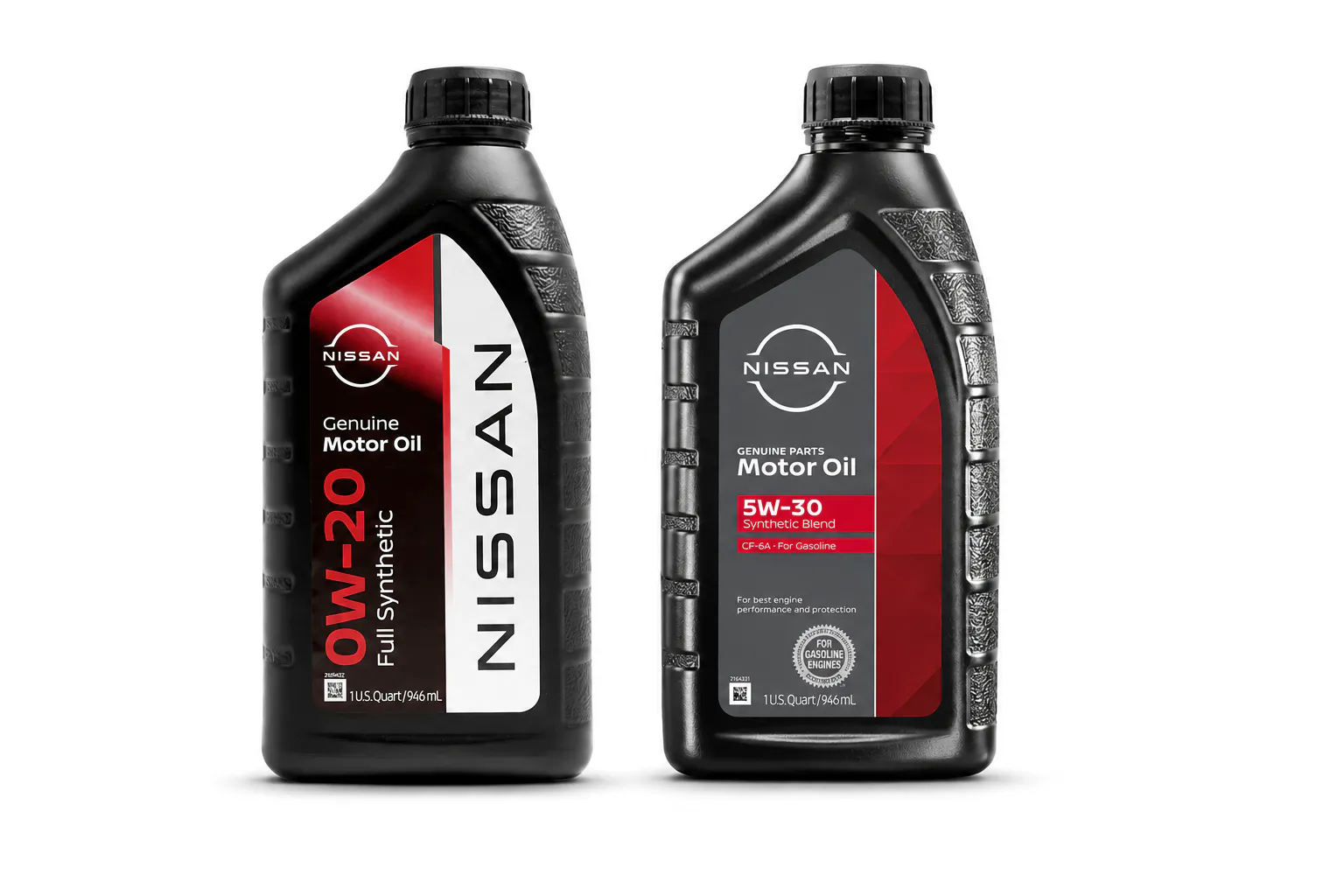
Nissan OW-20 helps to extend engine life and protects for up to 15 years or 500,000 miles, whichever comes first. Guaranteed*. How do we do it? Well, Nissan OW-20 is Made from Natural Gas, meaning its base oil is 99.5% free of engine clogging impurities. Now offering Carbon Neutral products. Trust your car with the most trusted brand of motor oil.
Designed for select older Nissan vehicles that do not require synthetic oil.
Conventional motor oil provides reliable engine protection for everyday driving and helps maintain proper lubrication under normal operating conditions.
Recommended for many Nissan vehicles model year 2010 and older.
- Nissan-recommended oil and filter specifications
- Factory-trained Nissan technicians
- Courtesy vehicle inspection
- Tire pressure and tread depth check
- Maintenance recommendations based on Nissan schedules
- Service records maintained with your vehicle history
- Convenient online appointment booking

Modern Nissan engines are engineered around specific oil viscosities and performance standards.
Using the recommended oil helps support:
- Proper engine lubrication
- Cold-weather starting performance
- Fuel economy
- Emissions system performance
- Long-term engine durability
Using an oil that does not meet Nissan’s specifications may reduce the effectiveness of these protections and could affect overall engine performance.
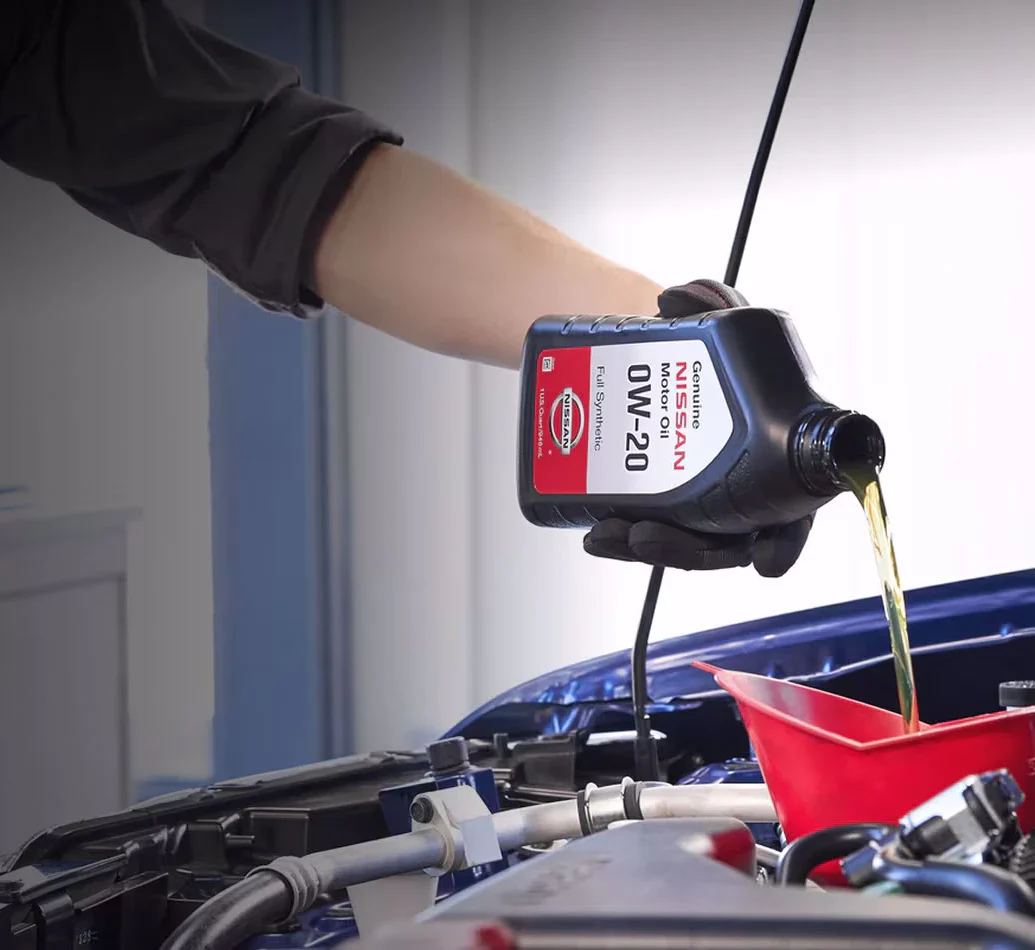
Winnipeg drivers experience some of Canada’s most demanding driving conditions. Extreme winter temperatures, frequent cold starts, short trips, and stop-and-go traffic can place additional stress on your engine and motor oil.
Fresh oil helps:
- Protect engine components from wear
- Improve cold-weather lubrication
- Reduce harmful engine deposits
- Support fuel efficiency
- Maintain long-term engine reliability
Routine oil changes help ensure your vehicleis ready for Manitoba’s changing seasons.

Your vehicle may show several signs that service is due:
- Maintenance reminder displayed
- Oil change interval reached
- Reduced fuel economy
- Increased engine noise
- Dark or dirty oil
- Low engine oil level
- Rough engine operation
- Oil warning light illuminated
If you’re unsure whether you are due for service, we can help review your maintenance schedule.

A quality oil filter helps remove contaminants before they circulate through the lubrication system.
Replacing the oil filter during every oil change helps:
- Maintain oil cleanliness
- Protect moving engine components
- Support proper oil flow
- Promote long-term engine reliability
We install filters that meet the requirements of your Nissan vehicle.

What motor oil is right for my vehicle?
Choosing the correct motor oil for your car, light truck or SUV should be done after consulting your vehicle owner’s manual. Our oil change experts can help with the decision as well. Newer vehicles may require full-synthetic motor oil, but not always. Some new cars still require either semi-synthetic or conventional motor oil for complete protection. Vehicles with more than 75,000 engine miles may benefit from using a high mileage motor oil.
What is the difference between semi-synthetic and full-synthetic motor oil?
Semi-synthetic engine oil is a mixture of synthetic and mineral engine oil, and full-synthetic oil is entirely artificial. Semi-synthetic motor oil offers better engine protection than mineral oil but not all the benefits of full-synthetic. Full-synthetic motor oil changes are more expensive than semi-synthetic oil changes.
What can happen if I don’t have my oil changed regularly?
Routinely driving longer than the vehicle manufacturer’s recommendation between oil changes will shorten the life of your engine. Neglecting oil changes completely can lead to engine failure as motor parts will wear out without the lubricating and heat transferring properties of oil. Have your vehicle’s oil changed at intervals directed by the owner’s manual.
Why does my oil filter need to be changed and how often should it be replaced?
Oil filters remove harmful dust and debris from your motor oil. If your oil filter is worn or clogged, unfiltered dust and debris will begin to build up in your motor oil and cause wear on engine parts. Your oil filter should be changed at every oil service interval.
How often should you change your oil?
Understanding how often to change oil depends on the individual vehicle. Drivers generally make an appointment for oil change service every 3,000-5,000 miles, or around every 3-6 months. We recommend changing your oil within your vehicle manufacturer scheduled maintenance mileage interval or oil life.